Solo Leveling
TV202412 epsFinished
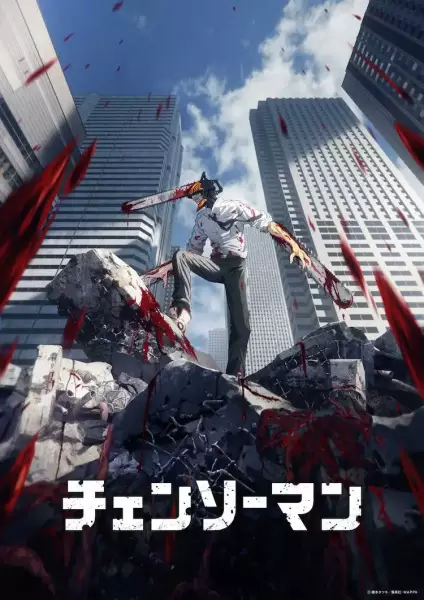
This Aniwatch Chainsaw Man guide focuses on the show's rough emotional edge, devil-hunting premise, and compact episode path.
The copy avoids lifted descriptions and gives search visitors a useful snapshot of tone, themes, and navigation. Each episode guide adds an original note about the story beat while making clear that no video stream is hosted here.
A broke devil hunter with tiny dreams is thrown into a violent public-safety world where every desire has a cost. The result is chaotic, stylish, and strangely human beneath the noise.
Chainsaw Man is what happens when a creator with no interest in following genre rules gets a large budget and full creative freedom. Tatsuki Fujimoto's manga was already notorious for its whiplash tonal shifts before MAPPA adapted it in 2022, and the anime leaned into that reputation rather than smoothing it out.
The world runs on a straightforward and unsettling logic: devils are born from human fear, and the more people fear a concept, the stronger its devil becomes. This means the Gun Devil is terrifying and the Tomato Devil is not. Devil hunters kill them for money, and Denji is at the very bottom of that industry, working off a debt his father left behind to yakuza who have no intention of ever letting him clear it.
Denji lives in a shack, sells his own organs, and shares scraps with Pochita, a small chainsaw devil who has become his only friend. His ambitions are almost painfully modest. He wants to eat bread with jam. He wants to sleep somewhere warm. He wants, vaguely, to touch a woman.
When the yakuza betray him and he dies, Pochita makes a contract and becomes his heart, resurrecting him as Chainsaw Man. He is immediately recruited by Makima, a Public Safety officer who offers him food, shelter and a job in exchange for absolute obedience. The series' central tension is set in that first exchange: Denji is being handed everything he ever wanted by someone who is very clearly using him, and he is too starved to care.
Denji is a deliberately unheroic protagonist. He is not stupid, but he is uneducated and driven almost entirely by appetite, and the series refuses to sand this down into something more palatable. His arc is not about becoming noble; it is about slowly discovering that he wants things he cannot name.
Power is a Blood Fiend, arrogant, filthy, cowardly and a compulsive liar, and she becomes the series' most unexpectedly affecting character. Aki Hayakawa is the closest thing to a conventional hero here, a hunter driven by revenge against the Gun Devil who killed his family, and whose contracts with the Fox Devil and Curse Devil steadily cost him pieces of his life.
Makima is the reason the series works. She is calm, kind-sounding and completely opaque, and every apparently generous thing she does reads differently on rewatch. The first season keeps her intentions almost entirely hidden while making it obvious that hiding them is the point.
MAPPA made an unusual choice: they adapted Chainsaw Man as if it were a film, with cinematic lighting, restrained colour, and camera work modelled on live-action direction. Each episode also received a different ending theme by a different artist, twelve in total, which is almost unheard of for a single cour.
The result is technically stunning and tonally different from the manga, which was scrappier and funnier on the page. Some readers felt the polish worked against Fujimoto's deliberately crude energy. Viewers coming to it fresh generally have no such complaint, and the action sequences, particularly the Katana Man chase through Tokyo, are among the best animated fights of the decade.
Beneath the devil hunting, Chainsaw Man is about how easily desire becomes leverage. Denji's dreams are so small and so specific that anyone who can satisfy them owns him, and the series keeps returning to how ordinary that arrangement is.
It is also unusually honest about class. Denji's poverty is not backstory to be moved past; it shapes every decision he makes. The series treats the gap between people who can afford ideals and people who cannot as its real subject, with the devils largely functioning as the mechanism that makes the point visible.
If you want action horror that is willing to be genuinely upsetting, funny and sad within the same episode, Chainsaw Man delivers that better than almost anything else. Viewers who like unpredictable storytelling and characters who are allowed to be unlikeable will find a lot here.
It is a poor fit for viewers who want a clear moral framework or a protagonist to root for straightforwardly. The series contains graphic violence, body horror, and content aimed squarely at adults. It is not a starting point for younger viewers or for anyone wanting a comfort watch.
The first season runs twelve episodes and covers the early Public Safety arc, ending after the Katana Man confrontation. It adapts roughly the first third of the manga's first part and stops at a deliberate pause rather than a resolution.
Watch in release order. A film continuing the story from where the season ends has been produced, so the anime is best approached as an ongoing adaptation rather than a self-contained work.
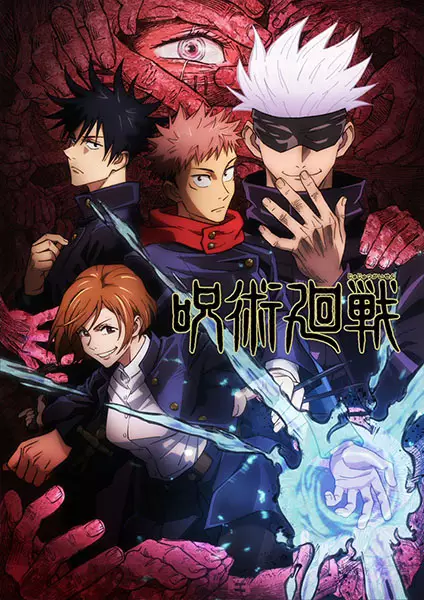
Jujutsu Kaisen is the natural next watch, sharing MAPPA's production, a modern supernatural setting, and a similarly grim willingness to kill characters who seem safe. Its tone is less chaotic but the technical quality is comparable.
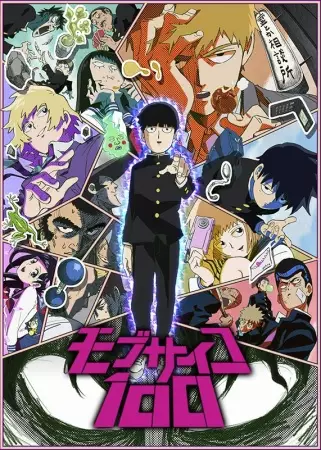
Blue Lock matches its abrasive energy and its interest in characters whose motivations are openly selfish. For something in the same supernatural space with a far gentler tone, Mob Psycho 100 offers psychic action built around kindness rather than appetite.
No. The series contains graphic violence, body horror, sexual content and mature themes throughout. It is aimed at adult audiences.
The first season runs twelve episodes, covering Denji's recruitment into Public Safety through the Katana Man arc.
No. The anime adapts the story from the beginning and works as a complete entry point. Manga readers will notice the anime is tonally more restrained than the source.
MAPPA commissioned twelve different ending themes from twelve different artists, each paired with its own animation sequence. It was a deliberate creative choice reflecting the series' shifting tone.
Both, often within the same scene. The rapid tonal shifts between crude humour, action and genuine horror are central to how the story works rather than an inconsistency.