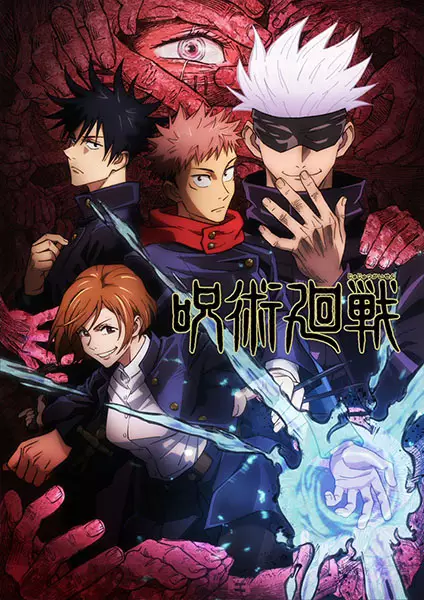
Jujutsu Kaisen
TV202015 epsFinished

This Aniwatch Demon Slayer guide presents the first part of the anime with selected episode pages and a clean path for fans browsing action and supernatural titles.
The writing emphasizes the show's emotional hook, sword-training progression, family bond, and visual combat style without duplicating text from the sample site or other summaries.
A kind boy becomes a swordsman after tragedy destroys his home and transforms his sister. His path blends grief, discipline, and breathtaking battles against demons shaped by sorrow and cruelty.
Demon Slayer: Kimetsu no Yaiba is the series that demonstrated how far animation quality alone can carry a story. Koyoharu Gotouge's manga was a solid but unremarkable performer until ufotable's 2019 adaptation turned it into a global phenomenon, and the follow-up film went on to become one of the highest-grossing releases in Japanese box office history.
The story is deliberately traditional. Taisho-era Japan, a family of charcoal burners living in the mountains, and a son who comes home from selling coal to find everyone dead. Only his sister Nezuko survives, and she has been turned into a demon.
Tanjiro Kamado's goal is stated in the first episode and never wavers: find a way to turn Nezuko human again, and find the demon who destroyed his family. To do either, he has to join the Demon Slayer Corps, a secret organisation the government does not acknowledge.
What follows is a fairly classical structure, and the series is comfortable with that. Tanjiro trains under the former Water Hashira Sakonji Urokodaki, survives the brutal Final Selection on Mount Fujikasane, and begins taking missions. The escalation is orderly: ordinary demons, then the Twelve Kizuki, then eventually Muzan Kibutsuji himself, the progenitor of every demon alive.
Tanjiro's defining trait is not strength but empathy, and the series commits to it more seriously than most shonen protagonists' stated virtues. He grieves for the demons he kills, listening to their final memories as they dissolve, and the show treats this as costly rather than cheap.
Nezuko is unusual for a character who barely speaks. Her struggle to retain her humanity is conveyed almost entirely through animation and sound design, and her protective instinct toward humans is the series' central hope that demons are not beyond saving.
Zenitsu Agatsuma is a coward who can only fight while unconscious, and Inosuke Hashibira is a boar-masked feral who was raised by animals. Both are comic relief that the series steadily reveals to be carrying serious damage. The Hashira, the nine strongest slayers, are introduced gradually and function as the story's ceiling.
ufotable's approach blends hand-drawn character work with digital compositing in a way few studios have matched. Breathing techniques are rendered as flowing water, flame, or thunder in styles borrowed directly from ukiyo-e woodblock prints, so each fight has a distinct visual identity rooted in Japanese art tradition.
The most-discussed example remains the nineteenth episode of the first season, whose combination of animation, Yuki Kajiura and Go Shiina's score, and precise emotional timing produced one of the most widely shared sequences in modern anime. The series is a genuine argument that execution can elevate familiar material into something exceptional.
Demon Slayer is built on grief. Nearly every character, slayer and demon alike, is defined by something they lost, and the series consistently gives its villains full backstories in their final moments rather than treating them as disposable.
The result is a story that is unusually gentle for something so violent. Tanjiro's insistence that demons were once people, and that this fact still matters even as he kills them, gives the series a moral centre that keeps its escalating fights from feeling hollow.
If you want beautifully animated action with a clear emotional core and a straightforward, well-paced story, Demon Slayer is one of the easiest modern series to recommend. It is a strong choice for viewers new to anime because it requires no genre literacy.
It is less rewarding for viewers who want narrative complexity or moral ambiguity. The plot is linear, the hero is unambiguously good, and the structure is predictable by design. Its strengths are execution and feeling rather than surprise.
The first season runs twenty-six episodes and covers Tanjiro's training through the Mount Natagumo arc. The Mugen Train film continues directly from the season's end and is essential rather than optional, because the following season begins immediately afterwards.
The recommended order is: season one, the Mugen Train film, then the Entertainment District arc and onwards. A television version of Mugen Train exists with additional material, and either version works.
Jujutsu Kaisen occupies similar territory with a modern setting and a darker tone, and its fights reward tactical thinking in a way Demon Slayer's rarely do. Both are among the best-animated action series of recent years.
The Apothecary Diaries shares the historical setting and period atmosphere while trading combat for mystery and court intrigue. For a fantasy series with the same emotional patience but a far quieter register, Frieren: Beyond Journey's End is an excellent follow-up.
Yes. The film continues directly from the first season's ending, and the following season begins immediately after its events. Skipping it leaves a real gap in the story.
The first season runs twenty-six episodes, covering Tanjiro's training, the Final Selection, and the Mount Natagumo arc.
It contains significant violence and some disturbing imagery, though it is less graphic than series like Chainsaw Man. It is generally considered suitable for older teenagers.
Her resistance is established as unusual and central to the plot, connected to hypnotic suggestion from Urokodaki and her own protective bond with Tanjiro. The series treats it as a genuine anomaly.
Yes. The story is easy to follow, requires no genre background, and its animation quality makes it accessible even to viewers unused to the medium.