Spy x Family
TV202212 epsFinished
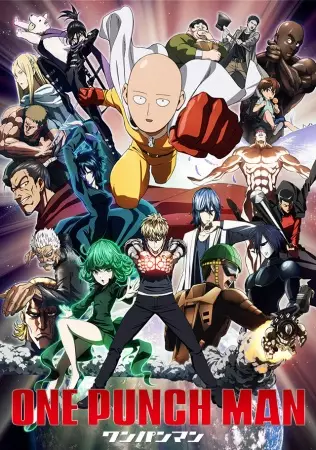
The One Punch Man entry on Aniwatch is a compact guide for the first season, pairing action-comedy positioning with selected episode pages and related anime links.
This copy is written from scratch for search users who want quick context: absurd power scaling, hero society satire, and the boredom that follows effortless victory.
A hero who can end any fight instantly discovers that invincibility is not the same as fulfillment. The series turns superhero spectacle into deadpan comedy without losing its action punch.
One Punch Man began as a crudely drawn webcomic by an artist working under the pen name ONE, was redrawn by Yusuke Murata into one of the most technically accomplished manga in print, and was adapted by Madhouse in 2015 into a series that is still cited as a high point for action animation. The journey from rough webcomic to industry benchmark is unusual enough to be part of the appeal.
The joke is in the title. Saitama trained for three years, doing one hundred push-ups, sit-ups, squats and a ten kilometre run every day, and became strong enough to end any fight with a single punch. He also went bald. And having achieved absolute power, he discovered that it made everything boring.
Saitama's problem is not villains, it is that no villain can give him a fight. He drifts through a world of professional heroes registered and ranked by the Hero Association, technically qualified for C-class because he never bothered to prepare for the written exam properly, watching monsters that terrify entire cities die instantly to a casual swing.
The series turns this into a genuine structure rather than a one-note gag. Because Saitama cannot be threatened, tension has to come from everyone else. The fights that matter are fought by heroes who can actually lose, and Saitama's arrival is usually the punchline that ends a sequence someone else nearly died in.
Saitama is a deadpan protagonist whose flat affect is the source of both the comedy and the melancholy. He is not arrogant; he is bored, and mildly annoyed that nobody recognises him. His arc, such as it is, involves slowly finding value in things that are not fighting.
Genos is the counterweight, a cyborg driven by revenge who appoints himself Saitama's disciple and delivers earnest, lengthy analyses of situations Saitama has already resolved. The dynamic between Genos' intensity and Saitama's indifference generates most of the series' best comedy.
The Hero Association gives the world its satirical bite. Heroes are ranked, publicly rated and judged by reputation rather than results, which means genuinely capable people like Mumen Rider, a C-class hero with no powers whatsoever and unlimited courage, sit far below telegenic frauds. Mumen Rider's confrontation with the Deep Sea King remains the series' emotional peak precisely because he cannot win.
Madhouse's 2015 production assembled an unusually deep roster of animators and gave them room to work. The result is fight animation with weight and impact that few series have matched since, particularly in sequences involving Genos and the Deep Sea King arc.
It is worth knowing that the second season moved to a different studio and is widely regarded as a step down in animation quality, though the writing remains largely intact. For most viewers the first season is the definitive experience, and it functions well as a self-contained work.
Underneath the parody is a genuine question about what happens when you get what you wanted. Saitama achieved his goal completely, and the achievement hollowed out the thing he enjoyed. The series treats this as funny and quietly sad in roughly equal measure.
The second thread is about recognition. Saitama saves cities and receives blame; heroes who do far less receive acclaim. The series is sharp about the gap between doing good and being seen to do good, and about the fact that Mumen Rider, who will never win a fight, is closer to a hero than most of the S-class.
If you enjoy genre parody executed with total sincerity, exceptional action animation, and comedy that does not undercut its emotional beats, One Punch Man is essential viewing. It is also very accessible, requiring no familiarity with the superhero or shonen traditions it is satirising.
It is a weaker fit if you want sustained narrative tension or a protagonist who grows through struggle. Saitama's invincibility is the premise, not a problem to be solved, and viewers who need stakes attached to the main character may find it unsatisfying.
The first season runs twelve episodes and covers Saitama's introduction through the Deep Sea King and the Boros confrontation. It is largely self-contained and reaches a satisfying stopping point.
Watch in release order. There are also OVA episodes that are entirely optional side stories, and a second season that continues the plot with a different production team.
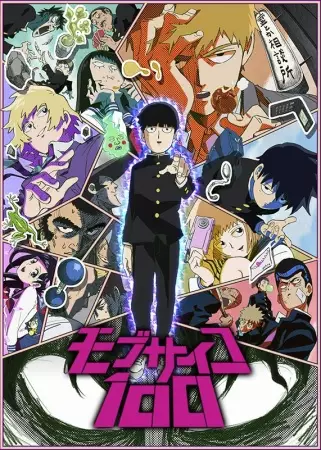
Mob Psycho 100 comes from the same creator and is the more emotionally ambitious work, applying a similar overpowered-protagonist premise to a coming-of-age story about a boy who would rather not use his abilities at all.
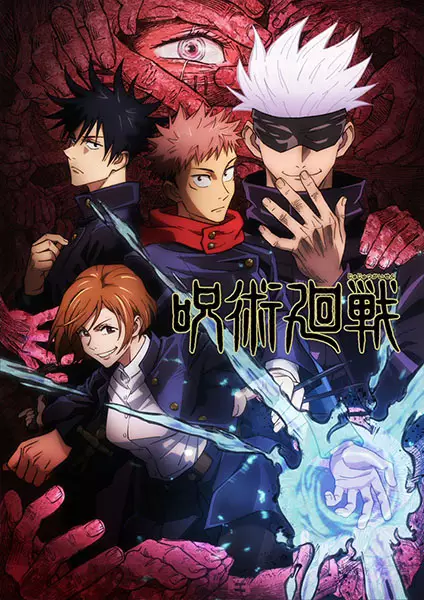
Solo Leveling is the direct inverse, spending its entire runtime on the climb that Saitama has already completed. Jujutsu Kaisen offers comparable action quality with conventional stakes and a protagonist who can genuinely lose.
Yes. The series builds tension around the supporting heroes who can lose, and uses Saitama's invincibility as a comedic and thematic device rather than a source of suspense.
The first season runs twelve episodes, covering Saitama's introduction through the confrontation with Lord Boros.
Season two moved to a different studio and is widely considered weaker in animation quality, though the story remains faithful to the source. The first season is the stronger production.
No. The anime adapts the story from the beginning. The webcomic and manga diverge from each other in places, but neither is required viewing preparation.
Both. It is a parody of superhero and shonen conventions that also delivers some of the best-animated action sequences in the medium.